When the going gets weird, the weird turn pro. - Hunter S. Thompson

24 May 2008

Le grand saut

Followup to a (much) earlier post:
He has spent two decades and nearly $20 million in a quest to fly to the upper reaches of the atmosphere with a helium balloon, just so he can jump back to earth again. Now, Michel Fournier says, he is ready at last.

Depending on the weather, Fournier, a 64-year-old retired French army officer, will attempt what he is calling Le Grand Saut (The Great Leap) on Sunday from the plains of northern Saskatchewan.

He intends to climb into the pressurized gondola of the 650-foot balloon, which resembles a giant jellyfish, and make a two-hour journey to 130,000 feet. At that altitude, almost 25 miles up, Fournier will see both the blackness of space and the curvature of the earth. He will experience weightlessness.

Then he plans to step out of the capsule, wearing only a special space suit and a parachute, and plunge down in a mere 15 minutes.

If successful, Fournier will fall longer, farther and faster than anyone in history. Along the way, he can accomplish other firsts, by breaking the sound barrier and records that have stood for nearly 50 years.

20-Year Journey for 15-Minute Fall (New York Times, 24 May 2008)

22 May 2008

MeMe

Fun meme over at Buck's place:
[T]he idea is to answer these questions with only a photo or other graphic, NO words allowed.
1. What is your current relationship status?


high on love
Originally uploaded by jaki good.


2. What is your current mood?

let sleeping gatos lie scaled

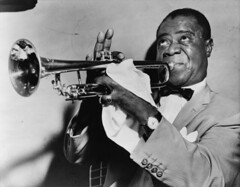
3. What is your favorite band/singer?


Louis Armstrong | Giants of Jazz Series
Originally uploaded by discoverblackheritage.


and

4. What is your favorite movie?

blade runner

5. What kind of pets do you have?

Bella Backs Up Gato

6. Where do you live?

The Neighborhood

7. Where do you work?


DSC_0225
Originally uploaded by joaue.


8. Who do you look like?

betty sue hodges campbell age 34 circa 1964

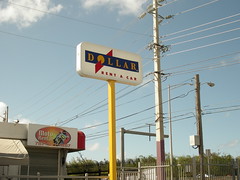
9. What do you drive?


dollar rent a car
Originally uploaded by Atlantisa7.

10. What did you do on Saturday?

Sunrise From A Plane Window

11. What did you do on Sunday?


traffic jam
Originally uploaded by K2D2vaca.


12. What is your favorite network TV Show?


Forgotten television
Originally uploaded by autowitch.


13. Describe Yourself.

Briefcase Contents - Workday Edition

14. What is your favorite candy?


Goo Goo Clusters
Originally uploaded by kamico.

20 May 2008

The best advice I ever got

Leonard Lauder:
...[I]f you had something good to say, you should put it in writing. But if you had something bad to say, you should tell the person to his or her face.

I learned this lesson the hard way. I'm chairman of the Whitney Museum of American Art in New York, and several years ago, I was angry with one of my trustees. I wrote a letter and signed it. But then I decided not to send the letter, and left it on my desk over the weekend. The following Monday I was out of the office, when a temp saw the letter and mailed it. The trustee got very angry and resigned from the board. To this day, writing that letter is something that I regret.
The best advice I ever got (Fortune.com)

16 May 2008

Unhappy X'ers

Workers in their 30s and early 40s, otherwise known as Generation X, are growing unhappy with corporate life and planning a retreat, says Tammy Erickson, an expert on generational work force issues.

That’s bad news for their employers, who are looking to this cohort as next generation leaders.

Why are the Xers so cross? In her blog, Erickson provides 10 possible answers.

The View From Harvard Business: Gen X Is Unhappy At Work

See Tammy Erickson's original post here: 10 Reasons Gen X'ers Are Unhappy At Work

14 May 2008

NPR's China Coverage

The news coverage of the China earthquake has been heartbreaking. The scenes on television are just unreal, almost unbelievable; disaster on this scale is hard to comprehend.

But some things are still best conveyed by radio. It can be a tremendous medium for storytelling.

National Public Radio ran a story on the quake's aftermath this afternoon that, well, completely tore me up. It took me quite a while to recover from it.

Melissa Block, on the ground in China, accompanied survivors as they frantically clawed through the rubble of their collapsed apartment building, looking for their loved ones.

The story is about 12 minutes long, and is so evocative of the horror on the ground that it is, candidly, really hard to take... but it's also one of the best pieces of radio journalism I think I've ever heard.

The ordinarily stalwart Ms. Block was not keeping it together all that well at points, and I have to say I was right there with her... the hell with journalistic (or personal) detachment in a situation like this.

The Scots-Irish, and how they vote

Josh Marshall nails it in a brief but cogent analysis of the Appalachian region. Excerpt:
It's widely accepted that Hillary Clinton does better with older voters, less educated voters and white voters. These demographics perfectly match West Virginia -- and, more loosely, the entire Appalachian region. A few key points from tonight's exit polls demonstrate the point: 4 out of 10 voters were over 60 years of age. 7 out of 10 lacked a college degree -- the highest proportion of any electorate in the country. And 95% of the electorate was white.

Basically you have a state that is made up almost exclusively of Clinton's voters. But there's a deeper historical explanation that we have to apply as well -- one nicely illustrated by the origins of West Virginia itself.

12 May 2008

Snark of the day

John Scalzi, on the occasion of a rave New York Times review of James Frey's new book:
Wait until they find out that this novel is actually a memoir.

The only man Carter could beat

The usual formula employed to describe Barack Obama is that he's our generation's John Fitzgerald Kennedy.

A worried conservative at American Thinker spells out his concerns in unusually plain language... in terms of personal charisma and likability, he might be FDR, JFK and RWR rolled into one:
Sensible McCain supporters need to begin this struggle with the following painful acknowledgement: on a personal level Barack Obama is one of the most ingratiating, likeable, least threatening, and intelligent-seeming men to run for the Presidency in the last hundred years.

There. Though I would no more vote for him than for Robespierre, I said it. It is a fact of consequence that needs to be faced.

In personal gifts relevant to political success, only three Americans during the twentieth century merit mention with Obama: Roosevelt, Kennedy and Reagan. This trio, as the historically well-schooled will recall, shared not only great political talent, but a common destiny: they all won.

So let's have no more talk of how much obviously weaker an opponent Obama is than what's-her-name. He is formidable enough, particularly for the execrable circumstances we confront.

[...]

A bit of history that seems relevant to the present situation: In 1980, back when communication was effected through messages chipped into stone tablets carried by horses, Ronald Reagan ran for the presidency against an incumbent named Carter. Carter enthusiasts breathed a collective sigh of relief when the Republican nomination was settled. They all knew their man was in trouble, but what luck! The Republicans had nominated an out-of-the-mainstream right wing extremist! The only man Carter could beat! Reagan's overall world view in fact was probably somewhat to the right of most Americans'. But in the event, Reagan won in a landslide, tremendously assisted by his ingratiating manner. There's more, of course, to why he won, but no one would dispute the importance of his manner.

10 May 2008

A good restaurant

You Guys Are Like the Gay Abbott and Costello

[Heading towards the restaurant "Good".]
Gay guy #1: Where are we going again?
Gay guy #2: It's "Good".
Gay guy #1: What's good?
Gay guy #2: The name of the restaurant we're going to.
Gay guy #1: I asked you what it was.
Gay guy #3: Oh, we are so not doing this...

--The Village

via Overheard in New York, May 10, 2008

(Good is a neighborhood place around the corner from us... and it really is. Good, I mean.)

Macs in suits

Millions of consumers are seeing the Mac in a new light. Once an object of devotion for students and artists, the Mac is becoming the first choice of many. Surging demand for the machines led Apple to predict revenues will rise 33% in the second quarter, to $7.2 billion, even in the face of an economic slowdown.

What's less obvious is that the enthusiasm is starting to spill over into the corporate market. It's a people's revolution, of sorts, with workers increasingly pressing their employers to let them use Macs in the office. In a survey of 250 diverse companies that has yet to be released, the market research firm Yankee Group found that 87% now have at least some Apple computers in their offices, up from 48% two years ago. "There's always been this archipelago of Macintosh use" among graphic artists and advertising managers, says Scott Teissler, chief information officer of Turner Broadcasting System (TWX). "My sense is that CIOs are more willing to see that expand without putting up as much resistance as in the past."

[...]

Mark Slaga, chief information officer of Dimension Data , a large computer services firm based in suburban Johannesburg, says he has received 25 e-mails recently from employees who want permission to use Macs at work. So far he has refused, because he doesn't want to hire people to provide Mac tech support, but "it'll happen someday," he concedes. "Steve Jobs doesn't need a sales force because he already has one: employees like the ones in my company."

BusinessWeek: The Mac In The Grey Flannel Suit (12 May 2008)

09 May 2008

It's not America, it's an island off the coast of America

Lawyers for Mayor Bloomberg are asking a judge to ban any reference to the Second Amendment during the upcoming trial of a gun shop owner who was sued by the city. While trials are often tightly choreographed, with lawyers routinely instructed to not tell certain facts to a jury, a gag order on a section of the Constitution would be an oddity.
Gag on 2nd Amendment is City's Aim in Guns Suit (NY Sun, 9 May 2008)

08 May 2008

The Big Mac Index

Concept of the day, courtesy of Investopedia: Big Mac Purchase Power Parity (PPP).
A survey done by The Economist that determines what a country's exchange rate would have to be for a Big Mac in that country to cost the same as it does in the United States. Purchase power parity (PPP) is the theory that currencies adjust according to changes in their purchasing power. With the Big Mac PPP, purchasing power is reflected by the price of a McDonald's Big Mac in a particular country. The measure gives an impression of how overvalued or undervalued a currency is.

The calculation of the Big Mac PPP-adjusted exchange rate looks at the price of a Big Mac in a given country and divides it by the price of a U.S. Big Mac. Let's say that we are looking at the Big Mac in China. If a Chinese Big Mac is 10.41 renminbi (RMB) and the U.S. price is $2.90, then - according to PPP - the exchange rate should be 3.59 RMB for US$1. However, if the RMB was actually trading in the currency market at 8.27 RMB for US$1, the Big Mac PPP would suggest that the rmb is undervalued.

07 May 2008

Ex-LAX

Dear Barry Campbell,

Due to the unprecedented rise in the cost of jet fuel, JetBlue will not be starting service from Los Angeles International (LAX) May 21st as previously announced. We sincerely apologize for the disruption to your travel plans and we hope that you understand this difficult decision. We have taken the liberty of rebooking your flights to and from Long Beach, CA. Your new itinerary is detailed below.

Your flight... on [REDACTED], departing New York, NY (JFK) and arriving in Los Angeles, CA (LAX) has been cancelled.

You are now confirmed on flight... on [REDACTED], now departing New York, NY (JFK) at... and arriving in Long Beach, CA (LGB)...
JetBlue really wanted me to get this message. They sent some variation of it to me five times... and then there was no way to re-route this flight via their web site; had to talk to a customer service rep.

In their defense, I have to say that the customer service agent I spoke to answered right away, was mighty nice, and was more than willing to re-route us to and from Burbank, California as opposed to Long Beach.

So we're still gonna make it to that wedding at the end of the month.

This could give new depth of meaning to "dead spots" in cellular coverage zones

Telemetry - the process of measuring critical indicators, and then relaying that information to a remote site for interpretation - has all kinds of interesting implications for improvements in the ways we manage what we measure.

Let's say the critical indicators you're measuring are a human being's "vital signs" (respirations, heart rate, blood pressure, etc.)

We've done this for race-car drivers, pilots, and astronauts for many years now, and equipment that does this kind of thing in a medical crisis is on the back of many (if not most, by now) ambulances. Smart defibrillators, which "interpret" a person's EKG and administer an electric shock to stop dangerous arrhythmias, can be found in mall food courts these days - or you can buy one for your home or office at Amazon.com for roughly the same cost as a Macbook.

Now, consumer-level medical telemetry appliances are about to proliferate. Although I hope for many more years of relatively good health, I am hopeful that when the time comes, I will be able to be fitted out with the nth generation of this gear:

The Bluetooth wireless technology that allows people to use a hands-free earpiece while making a mobile telephone call could soon alert the emergency services when someone has a heart attack, Ofcom predicts.

The communications regulator said that sensors could be implanted into people at risk of heart attack or diabetic collapse that would allow doctors to monitor them remotely.

If the “in-body network” recorded that the person had suddenly collapsed, it would send an alert, via a nearby base station at their home, to a surgery or hospital.

New wi-fi devices warn doctors of heart attacks (Times Online, 7 May 2008)

04 May 2008

Maureen Dowd, having none of it, thank you

Then came the Big Dog, crazy like a fox, for the coup de graceless. Campaigning in Clarksburg, W. Va., he said that his scrappy wife can win working-class voters, as compared with Obama’s Viognier-and-Volvo set.

“The great divide in this country is not by race or even income, it’s by those who think they are better than everyone else and think they should play by a different set of rules,” the former president said. “In West Virginia and Arkansas, we know that when we see it.”

Oh, well, at least Bill didn’t use the word uppity. And don’t you love this paean to rules coming from a man so tethered and humbled by rules that he invented an entirely new sexual etiquette to suit his needs in the Oval Office?

"This Bud's For You" (Maureen Dowd, New York Times, 4 May 2008)

02 May 2008

Question of the day

If Obama earns his party's nomination at the convention, and is elected to the White House in November, will pickup basketball games replace touch football on the lawn as an iconic Presidential activity?

30 April 2008

Investing and chewing gum at the same time

Warren Buffett is making a big bet on small comforts, and observes, in passing:
Warren Buffett, the world's richest person, said on Monday the U.S. economy is in a recession that will be more severe than most people expect.

Buffett made his comments on CNBC television after his Berkshire Hathaway Inc agreed to invest $6.5 billion in the takeover of chewing gum maker Wm Wrigley Jr Co by Mars Inc in a $23 billion transaction.

"This is not a field of specialty for me, but my general feeling is that the recession will be longer and deeper than most people think," Buffett said. "This will not be short and shallow.

"I think consumers are feeling gas and food prices," he added, "and not feeling they've got a lot of money for other things."

A screen that ships without a mouse ships broken

I was having dinner with a group of friends about a month ago, and one of them was talking about sitting with his four-year-old daughter watching a DVD. And in the middle of the movie, apropos nothing, she jumps up off the couch and runs around behind the screen. That seems like a cute moment. Maybe she's going back there to see if Dora is really back there or whatever. But that wasn't what she was doing. She started rooting around in the cables. And her dad said, "What you doing?" And she stuck her head out from behind the screen and said, "Looking for the mouse."


Here's something four-year-olds know: A screen that ships without a mouse ships broken. Here's something four-year-olds know: Media that's targeted at you but doesn't include you may not be worth sitting still for. Those are things that make me believe that this is a one-way change. Because four year olds, the people who are soaking most deeply in the current environment, who won't have to go through the trauma that I have to go through of trying to unlearn a childhood spent watching Gilligan's Island, they just assume that media includes consuming, producing and sharing.
Clay Shirky: Gin, Television and Social Surplus (HereComesEverybody.org)

Nah, no way this is going to be abused

Microsoft has developed a small plug-in device that investigators can use to quickly extract forensic data from computers that may have been used in crimes.

The COFEE, which stands for Computer Online Forensic Evidence Extractor, is a USB "thumb drive" that was quietly distributed to a handful of law-enforcement agencies last June. Microsoft General Counsel Brad Smith described its use to the 350 law-enforcement experts attending a company conference Monday.

The device contains 150 commands that can dramatically cut the time it takes to gather digital evidence, which is becoming more important in real-world crime, as well as cybercrime. It can decrypt passwords and analyze a computer's Internet activity, as well as data stored in the computer.

It also eliminates the need to seize a computer itself, which typically involves disconnecting from a network, turning off the power and potentially losing data. Instead, the investigator can scan for evidence on site.
Seattle Times: Microsoft device helps police pluck evidence from cyberscene of crime

Why anyone with more than a passing interest in the security of their information would use Microsoft products in the first place is sort of beyond me.

I wonder how many of these little USB drives have gone missing or been copied since the initiation of the COFEE program... and I wonder what the inevitable follow-on DONUT program is going to do. (Talk about pandering to your audience.)

Note to self: leave the monkey at home

What's the most outrageous request from a customer that you couldn't accommodate?

A customer wanted to dine with their pet monkey in the restaurant. Literally we had a guest walk into the restaurant hand in hand with a monkey and asked to be seated at the best possible table. I have been witness to a lot of different requests since coming form the Modern but that definitely has topped any request. The monkey was even wearing a little Burberry jacket.

George Atterbury, General Manager of Grayz restaurant, interviewed in Eater's "The Gatekeepers" series

29 April 2008

A pointy stick and an idea

An artistic Good Samaritan pointed me to Jim Denevan's site:
Jim Denevan makes freehand drawings in sand. At low tide on wide beaches Jim searches the shore for a wave tossed stick. After finding a good stick and composing himself in the near and far environment Jim draws-- laboring up to 7 hours and walking as many as 30 miles. The resulting sand drawing is made entirely freehand w/ no measuring aids whatsoever. From the ground, these drawn environments are experienced as places. Places to explore and be, and to see relation and distance. For a time these tangible specific places exist in the indeterminate environment of ocean shore. From high above the marks are seen as isolated phenomena, much like clouds, rivers or buildings. Soon after Jim's motions and marks are completed water moves over and through, leaving nothing.
I'm still getting over the fact that the man just walks out on the beach with a pointy stick in his hand and an idea in his head and makes beautiful, large-scale art... that is destined to go away at high tide.

I'd like to grab a copy of every photo on his site and post them here, but that would be rude, and also it would deprive you of the fun of checking them out yourself.

28 April 2008

If MSFT gets hostile

Marc Andreesen's musings on what happens if Microsoft attempts a hostile takeover of Yahoo are worth reading:
I have not seen a detailed analysis of how a full hostile takeover might play out -- the kind of analysis that you would be receiving if you were a Microsoft or Yahoo board member.

So I asked a pair of expert corporate attorneys -- Michael Sullivan and Ed Deibert at Howard Rice Nemerovski Canady Falk and Rabkin in San Francisco -- to work up such an analysis. What follows is their take blended with my commentary.

The list is life

Wasn't surprised to find that when this story ran, it was on Bloomberg news. If any company would have an exquisite sensitivity for the cash value of data, presented in a form that's useful to the user, it's Bloomberg.
April 28 (Bloomberg) -- Barack Obama's supporters are giving him more than just record amounts of cash. They also are providing personal information that may make his donor list the most powerful tool in U.S. politics.

Even if the Democratic presidential candidate doesn't succeed in his White House bid, this data will make Obama a power broker in the party for years to come. For the interest groups or Democratic candidates he chooses to sell it to, it would provide a gold mine of information and access to potential donors.

Almost 2 million people have entered personal information on Obama pages on social-networking Web sites such as Facebook, MySpace and his campaign's mybarackobama.com, offering home addresses, phone numbers, their views on specific issues and the names of friends. The data have allowed Obama, 46, to raise more than $200 million, fill sports arenas with supporters across the nation and motivate millions more with custom-tailored messages.

"It's gigantic," said Laura Quinn, chief executive officer of Catalist, a company that maintains a database of 280 million Americans. The list is as "transformational" as the advent of political advertising, she said.
Bloomberg News: Obama's "Gigantic" Database May Make Him Party's Power Broker

27 April 2008

Parts of the story we're not hearing

If we’ve learned any new rule in the 2008 campaign, it’s this: Once our news culture sets a story in stone, chances are it will crumble. But first it must be recycled louder and louder 24/7, as if sheer repetition will transmute conventional wisdom into reality.

When the Pennsylvania returns rained down Tuesday night, the narrative became clear fast. The Democrats’ exit polls spelled disaster: Some 25 percent of the primary voters said they would defect to Mr. McCain or not vote at all if Barack Obama were the nominee. How could the party possibly survive this bitter, perhaps race-based civil war?

But as the doomsday alarm grew shrill, few noticed that on this same day in Pennsylvania, 27 percent of Republican primary voters didn’t just tell pollsters they would defect from their party’s standard-bearer; they went to the polls, gas prices be damned, to vote against Mr. McCain. Though ignored by every channel I surfed, there actually was a G.O.P. primary on Tuesday, open only to registered Republicans. And while it was superfluous in determining that party’s nominee, 220,000 Pennsylvania Republicans (out of their total turnout of 807,000) were moved to cast ballots for Mike Huckabee or, more numerously, Ron Paul. That’s more voters than the margin (215,000) that separated Hillary Clinton and Mr. Obama.

Those antiwar Paul voters are all potential defectors to the Democrats in November. Mr. Huckabee’s religious conservatives, who rejected Mr. McCain throughout the primary season, might also bolt or stay home. Given that the Democratic ticket beat Bush-Cheney in Pennsylvania by 205,000 votes in 2000 and 144,000 votes in 2004, these are 220,000 voters the G.O.P. can ill-afford to lose.
How McCain Lost Pennsylvania (Frank Rich, New York Times, 27 April 2008)

26 April 2008

Knowledge that you can use

Tomorrow --Wood-Chippers and Car Trunks!

Student: So how can we use this information to our advantage?
Professor: Well, if you were ever going to kill someone you would want to bury them in wet ground.
Student: Like a swamp?
Professor, with evil grin: A swamp would be ideal.

--Electromagnetics Lecture, Columbia University

via Overheard in New York, Apr 26, 2008

Ribbing

The ribs were so good, that I was using Wildwood's ribs to teach my daughter how competition barbecue is judged. A RESTAURANT RIB. If you've never judged a barbecue contest, you don't understand how rare it is to get ribs of this quality in restaurants. The meat came off the bone only where bitten. The rib sweated lightly where the meat was removed. You could taste the meat and the seasonings and they actually complimented each other!
-- The proprietor of White Trash BBQ waxes ecstatic about Wildwood, the latest restaurant entry in New York City's barbecue joint explosion.

25 April 2008

The mean streets of Norwalk and Darien

Hell Hath No Fury Like Wednesday One-Liners

Preacher: We've got a lot of tourists here today and we know why you came -you want to see a black gospel church. And that's okay, that's okay! That's what we are. And you know, some of our members, they do it tough. Why, they come from such rough neighbourhoods as Connecticut and upstate New York ...

--Abyssinian Baptist Church, Harlem

via Overheard in New York, Apr 23, 2008

23 April 2008

How to lose a sure thing

After listening to four hours of Pennsylvania election commentary on CNN (the TV was on as background noise while I worked), I now feel qualified to opine publically about anything and everything. I couldn't possibly do worse.

Coverage of this election cycle has been generally awful, and with rare exceptions (see: David Gergen) last night on CNN was more of the same.

There's just not enough to talk about to fill the hours of airtime on a 24/7 cable news channel, so that's a guaranteed font of babbling vacuity... but with the newspaper business in deep malaise and decline, the journalists who used to turn out crisp reporting and analysis on deadline seem to be missing in action.

So.

Hillary came within six tenths of a point of getting the 10 point victory she needed to "stay alive" in the primary... when you're virtually eliminated mathematically from being selected as the nominee, I'm not sure what kind of life it is, but she's still in it.

Last fall, if you had presented me with *any* scenario in which the Republicans won the White House in November, I'd have dismissed you as a fantasist or a paranoid, depending on your point of origin on the political spectrum.

I did allow at the time, however, that if any political party could figure out a way to lose a sure thing, it would be the Democrats.

Damned if they aren't working on it.

This bitter, brutal, and fratricidal primary looks to continue for several more weeks, if Hillary can raise enough money on the strength of her showing last night. And if enough bitterness is engendered between and among Clinton and Obama partisans, that could be the margin of defeat for the Democrats in November, right there.

John McCain must not be able to believe his luck.

21 April 2008

AngryRenter.com

All we hear these days is whining from reckless home borrowers and their banks.

But did you know that renters are 32 percent of American households? And that homes in foreclosure are less than 2 percent?

So why is Congress rushing to bailout high-flying borrowers and their lenders with our tax dollars?

Unfortunately, renters aren't as good at politics as the small minority of homeowners (and their bankers) who are in trouble. We don't have lobbyists in Washington, DC. We don't get a tax deduction for our rent and we don't get sweetheart government loans.

Quite simply, we are just Angry Renters. And now it is our time to be heard: no government bailouts!

The superficially-seeming grassroots AngryRenter.com is actually an Astroturfing project sponsored by FreedomWorks. (Of course, I'm fine with that, but we try to practice transparency here.)

Kevin Phillips: Why the economy is worse than we know

I haven't found much worth reading in Harper's these days, and let my subscription lapse last year.

But on impulse, I picked up a copy in the airport over the weekend. There's a terrific article by Kevin Phillips in the May 2008 issue (not available online unless you're a subscriber.) This will give you the flavor of it:
The truth, though it would not exactly set Americans free, would at least open a window to wider economic and political understanding. Readers should ask themselves how much angrier the electorate might be if the media, over the past five years, had been citing 8 percent unemployment (instead of 5 percent), 5 percent inflation (instead of 2 percent), and average annual growth in the 1 percent range (instead of the 3-4 percent range). We might ponder as well who profits from a low-growth US economy hidden under statistical camouflage. Might it be Washington politicos and affluent elites, anxious to mislead voters, coddle the financial markets, and tamp down expensive cost-of-living increases for wages and pensions?

Let me stipulate: the deception arose gradually, at no stage stemming from any concerted or cynical scheme. There was no grand conspiracy, just accumulating opportunisms. As we will see, the political blame for the slow, piecemeal distortion is bipartisan--both Democratic and Republican administrations had a hand in the abetting of political dishonesty, reckless debt, and a casino-like financial sector. To see how, we must revisit forty years of economic and statistical dissembling.

[...]

The real numbers, to most economically minded Americans, would be a face full of cold water. Based on the criteria in place a quarter-century ago, today's U.S. unemployment rate is somewhere between 9 percent and 12 percent; the inflation rate is as high as 7 or even 10 percent; economic growth since the recession of 2001 has been mediocre, despite a huge surge in the wealth and incomes of the superrich, and we are falling back into recession. If what we have been sold in recent years has been delusional "Pollyanna Creep," what we really need today is a picture of our economy ex-distortion. For what it would reveal is a nation in deep difficulty not just domestically but globally.
(excerpt from "Numbers Racket: Why the economy is worse than we know" by Kevin Phillips, from the May 2008 issue of Harper's Magazine)

20 April 2008

We're going to need an environmental impact statement on those ashes

Somewhere, Jessica Mitford is smiling grimly:

Britain has been a world leader in eco-friendly funerals for years and a source of green burial products and ideas for countries like the United States, where the trend is just starting to catch on. Over the weekend in London, those in the business showcased their products and services at the Natural Death Center's Green Funeral Exhibition.

Some may expect green funerals to be as cheap as a do-it-yourself project, while others might brace for price hikes similar to those fair trade food.

But, funeral directors say green funerals — like any — run the gamut.

"It's about choice, not price," said Fran Hall, marketing director for Epping Forest Burial Park.

For a concept aimed at saving the Earth by going back to basics, an eco-funeral can be more complicated than it sounds. The Natural Death Center provides a handbook that suggests environmental targets for cemeteries.

"You can take any funeral and make it greener," said Michael Jarvis, the center's director.

Green Funerals Make For Eco-Exits (Associated Press via Yahoo, 20 April 2008)

Tribal logic

Via Chap, a review of a book that looks well worth reading:
Arab tribesmen are preoccupied with maintaining deterrence and prepared to use force preemptively, if necessary--rather like über neocons. The ironic but very real parallel is a function of the de facto stateless anarchy in which Arab Bedouin live--and the de facto global anarchy that hawkish conservatives rightly believe to be the underlying reality of the international system. Saddam Hussein's interest in being taken to possess WMDs, whether or not he actually had them, makes sense in light of the link between deterrence and reputation. The emboldening effects of America's pre-9/11 retreats in Somalia, Lebanon, and elsewhere show the reverse of the medal. Although this is a familiar litany, I'd argue that the fatwa against Salman Rushdie, the rage against the Muhammad cartoons, the killing of Theo van Gogh, and a host of related acts of intimidation ought to be placed under the heading of pro-active deterrence as well.

The swift and seemingly disproportionate resort to retaliatory force against apparently trivial offenses is an effective technique for suppressing future challenges. Most of the feuds Salzman describes, however weighty and enduring, break out over seemingly petty and inconsequential matters, like the mistaken appropriation of some palm trunks. Rifle shots, intentionally off the mark, are used to intimidate, as are calculated threats of murder. The careful use of targeted force and credible threats against Western critics of Islamism shows genuine mastery of the technique of deterrent intimidation. Here as elsewhere, an overtly religious action is actually shaped by a hidden tribal template.

Knowingly or unknowingly, American liberals and conservatives highlight sections of the tribal template, though for their own preferred uses. The implicit dovish take on tribalism notes that our own use of force actually serves to unite the foe. By hitting back at terrorist-harboring states, doves remind us, we create the impression of an infidel war against Muslims, thus figuratively recruiting every Muslim lineage into bin Laden's civilizational war party. This danger is real, yet the doves omit the rest. Failure to strike back creates an impression of weakness that invites further attacks.

"I and My Brother Against My Cousin" - Stanley Kurtz reviews Philip Carl Salzman's Culture and Conflict in the Middle East in The Weekly Standard


18 April 2008

The prepubescent Shaolin monks of Apex, NC

Had a wonderful Indian dinner earlier this week at a newish Indian restaurant called Tamarind in Apex, North Carolina - easily the equal of meals I've had at some of the better Indian restaurants in New York City.

But that's not what I'm here to talk about.

I'm here to talk about weirdness.

As a resident of NYC for these last 12 years, I've seen some wonderfully bizarre things. I still cherish the memory of the day I saw a local performance artist peddling down West 4th Street on an elevated tricycle, towing a full-sized concert harp behind her on an attached trailer.

As a connoisseur of weirdness, I have to say: that was prime.

But as I pulled into the parking lot of the restaurant in Apex, I saw something equally wonderful.

A large area of the parking lot was roped off, and there were dozens of small children in karategis, shouting, grunting, and whacking at each other with staffs. The sensei was instructing and encouraging them, and I'd swear on a stack of Bibles that at one point, he urged his young charges, "Go with God!"

Any way you parse it, this is great stuff.

Thought for the day

James Fallows, surfacing briefly from dealing with some family concerns out in California, weighs in on the depressing banality and irrelevance of the most recent Democratic debate:
Whatever else happens the next time we choose a president, there has got to be a better way to see candidates operate under pressure than the grotesque system that has metastasized during this electoral cycle. It makes candidates into mere props for bullying anchormen-narcissists. It does no one except the anchormen any good. I mentioned earlier the oddity of Jimmy Carter and GW Bush finding common cause about China policy. Maybe the RNC and the DNC can join hands in freeing political debate from the destructive grip of the networks. And if they can't do that, maybe we should just go all the way and have the candidates compete eating pails full of maggots on Fear Factor. That's the logical extension of where we're headed.
Sorry if you read this before breakfast, but the man has a point.

17 April 2008

Words fail me

People are too trusting, especially when there’s chocolate on the line.

A survey out today by the organizers of the tech-security conference Infosecurity Europe found that 21% of 576 London office workers stopped on the street were willing to share their computer passwords with a good looking woman holding a clipboard. People were offered a chocolate bar in exchange for the information. More than half of the people surveyed said they used the same password for everything.
Security is No Match for Chocolate and Good Looking Women (WSJ Technology Blog)

"Attractive woman holding clipboard and offering chocolate" works on men *and* women, by the way:
61% of workers surveyed shared their birthdates and a similar number – 60% of men and 62% of women – shared their names and telephone numbers.
Come on, kids. Let's be safe out there. Resist the siren song of Cadbury Dairy Milk, don't use the same password for everything, and for God's sake don't share personal information with strangers, even (especially!) hotties "taking surveys."

15 April 2008

Tax day musings

You know, I'm as capable of ranting about waste, fraud, and inefficiency in government as any other self-respecting economic conservative.

But when I read a story like this, I sometimes reflect that it's a good thing we're not getting all the government we're paying for.

12 April 2008

This is so the name of my heavy metal cover band

Useless information picked up in Wikipedia on the way to researching something else:
...German settlers in Texas would often refer to the armadillo as Panzerschwein ("armored pig").
Wikipedia article on armadillos

Ladies and gentlemen, Panzerschwein.

The 50 Greatest Comedy Sketches of All Time

This has been getting heavy coverage in the blog-o-mo-sphere, but on the off chance that you might have missed it (or passed up a chance to look):

The highbrow cinemaphiles at IFC and the brainy sex kittens at Nerve have combined resources to write their Top 50 list for television sketch comedy:
There's no more sure-fire way to kill something's intrinsic comedic value than to try to examine what makes it funny. The minute you start thinking, you stop laughing. So why, then, have Nerve and IFC.com devoted an enormous amount of time, manpower, monetary resources, server space and posh catered lunches to the pursuit of ranking the boob tube's finest sketch comedy offerings?

In part, we're here because magical new technology (*coughYouTubecough*) allows us to do more than just pontificate for paragraphs on end — now we can pontificate for paragraphs on end and provide audio-visual evidence to back up those pontifications. We provide the context, share our thoughts and feelings and let you commence with the guffawing and, naturally, the disagreeing. After all, the comedy sketch — short, sweet, completely silly or shot through with social commentary — worms its way into the public mind like nothing else, and has easily made the leap to the web when other forms have faltered.
This list is a lot of fun.

IFC: 50 Greatest Comedy Sketches
Nerve: 50 Greatest Comedy Sketches

Microhoo. Yahsoft. No, keep at it...

Michael Arrington is pretty sure he understands why Microsoft is pursuing Yahoo:
Microsoft makes a ton of revenue on sales of software that sit on the computer. $15 billion a year for Windows alone, and another $16 billion for Office and Exchange Server in 2007. That’s 60% of Microsoft’s total revenue, and profits from those groups float the rest of the company. Microsoft isn’t a viable company without their consumer and business desktop software profits.

The real question isn’t “What can Microsoft do to fix their Windows product?” but rather “Even If Windows and Office were perfect, would it be enough to keep Microsoft relevant in the medium term?” I think the answer to that latter question might be “nope.” And that, of course, is why they want Yahoo so badly. Online advertising revenue is their only real hope of long term survival.

TechCrunch: Gartner Says Vista Will Collapse. And That's Why The Yahoo Deal Must Happen. (11 April 2008)

On prancer, on dancer

...Jagger's voice has become monotonous. It is impossible not to have some doubts about a 63-year-old--however flat his stomach, however mini his hips--rustling up musical energies (if not from beyond the grave exactly, then) from a time long before punk. It is as if he is caricaturing himself from some dreadful late 1960s TV variety show. Even then, he was much more of a prancer than dancer.

Still, the old hits are here--"Jumping Jack Flash", "Sympathy for the Devil", "Brown Sugar". The best moments are when the band is joined by Buddy Guy, a brilliant old blues man, for a rendition of "Champagne and Reefer", and when Jagger slings a white electric guitar over his shoulder to join his two guitar regulars for a thrumming, visceral "Some Girls".

Both numbers point up the band's elemental strengths: their lashing blues base and their essential structure as a guitar band (just watch those three budding pensioners axe away in "Some Girls"). Rock'n'roll gets neither longer in the tooth nor more basic than this.

James Woodall, "Watching 'Shine A Light'" (More Intelligent Life)

11 April 2008

A hell of a town

Which Speaker You Find More Annoying Says a Lot About You as a Person
Environmentalist with clipboard: Excuse me, do you have a minute to help save the environment?
Woman in suit: I'm sorry, I already saved the children this morning and then told the Democratic Party to go fuck themselves three blocks ago, so no, I don't have time to save the environment today. Maybe tomorrow, hippie.

--Broadway & Bond

Overheard by: Betty Noir
via Overheard in New York, Apr 11, 2008

Whine connoisseur

Sage advice from productivity wizard Merlin Mann:

First off, even when it’s yourself, nobody likes a whiner. So it’s worthwhile to be mindful about the extent to which your internal monologue is becoming personally insufferable. As with B.O. and a lack of flossing, the chances are good that others have already noticed things about you before you have, so — you know — congratulations on making it to the party.

But, second, and perhaps more importantly, that whining should be telling you something. Whining is the white smoke in your tailpipe that lets you know you’re burning mental oil. It means you’re unconsciously devoting cycles to something that you can’t, won’t, or shouldn’t be spending time thinking about. Otherwise, why would it be bothering you, right? You’d be either extricated or done with it.

Once you pinpoint where that whine’s coming from, that’s the perfect opportunity to decide what the hell the hang-up is. Because if it’s worth whining and fussing about, it’s worth deciding what obstacle (obstruction?) in either the Real World or your own mind is keeping something from happening.

Whining, White Smoke & The Mechanics Of Getting Unstuck (43 Folders)

In the days we sweat it out in the halls of the New York Armory Show

E Street Band drummer Max Weinberg has a hobby renovating houses and is working on a profitable sideline as a real-estate developer:
Bruce Springsteen and the E Street Band had just finished playing a sold-out show at Earls Court in London, and Max Weinberg, the band's longtime drummer, was thinking about countertops.

Specifically, Kirkstone countertops. Mr. Weinberg wanted the pale green stone for the kitchen in the house he was building back in New Jersey. He knew the stone came from England, and he noted a kitchen-supply store they passed on the way back from the concert. The next day, the store's manager told him that it didn't stock the material but suggested he try the Kirkstone showroom nearby. Mr. Weinberg paid a visit and had the stone shipped across the Atlantic.
Born To Renovate (Wall Street Journal, 11 April 2008)

We all grow older and grow up, I reckon.

08 April 2008

Perception of the doors

"My only advice is, if you can get me to offer you $5,000 not to open the door, take the money and go home." - Monty Hall (interviewed by John Tierney in the New York Times in 1991)

Explanation here:

There is no car behind Door 3, since the host opened it, so the last term must be zero. This can be proven using Bayes' theorem and the previous results:

\begin{align} P(C_3|H_{13},\,I) &= \frac{P(H_{13}|C_3,\,I)\,P(C_3|I)}{P(H_{13}|I)} \\  &= \left(0\times\frac13\right) /\, \frac12 = 0\ . \end{align}

Hence:

P(C_2 | H_{13},\,I) = 1 - \frac13 - 0 = \frac23 .
This shows that the winning strategy is to switch the selection to Door 2.
Hat tip: Carrie

06 April 2008

"...and the last three stanzas of your life will purely suck."

At Making Light, Jim Macdonald ponders the moral lessons that can be learned from the folksongs of the British Isles:
Avoid navigable waterways. Don’t let yourself be talked into going down by the wild rippling water, the wan water, the salt sea shore, the strand, the lowlands low, the Burning Thames, and any area where the grass grows green on the banks of some pool. Cliffs overlooking navigable waterways aren’t safe either.

[...]

Going to sea to avoid marrying your sweetie is an option, but if she hangs herself after your departure (and it’s even money that she’s going to) her Doleful Ghost will arrive on board your ship and the last three stanzas of your life will purely suck.

If you are a young gentleman who had sex it is possible the girl won’t get pregnant. In those rare instances you will either get Saint Cynthia’s Fire or the Great Pox instead. No good will have come of it.

[...]

Professions to be particularly wary of: clerks, salty sailors, serving maids, blacksmiths, highwaymen, gamblers, rank robbers, stonemasons, soldiers, tinkers, and millers. Anyone described as “jolly,” “bold,” or “saucy.” Supernatural creatures are best avoided. If they can’t be avoided, they should be addressed respectfully. If a supernatural creature sets you a task you’re well and truly screwed.

We're not in Kansas anymore

The NCAA men's basketball semifinal game between UNC and Kansas was not the nailbiter that I expected. More's the pity.

UNC collapsed comprehensively in the first half, going into the locker room, unbelievably, almost thirty points down...and though they whittled the Kansas lead to four points briefly in the second half, Kansas led and essentially remained in control for the entire game.

The outcome was never really in doubt.

UNC had a great year. The played a very nearly perfect season and were dominant throughout the tourney.

I had been really looking forward to last night's game, because I expected that it would be the first time the Heels would really be challenged in the tournament.

Be careful what you wish for, I reckon. :-)

The next big news out of Carolina basketball is likely to be Tyler Hansbrough's decision about whether to turn pro.

04 April 2008

Sesame Street represent

Disgruntled Bear Stearns investors are everywhere

I AM THE ONE OUT THERE ON THE STREET!

Four-year-old girl screaming: IT IS MY MONEY AND I WANT IT BACK!
Shockingly calm but exhausted Dad: No Sarah, it is OUR money.
Sarah [chanting over and over while stomping her feet.]: IT IS MY MONEY! I WANT IT BACK!

--Bank, Madison Ave & E 65th

Overheard by: Christina

via Overheard in New York, Apr 4, 2008

01 April 2008

Happy April Fool's Day!

To celebrate, why not read about the Top 100 April Fool's Hoaxes of All Time?

Here's a personal favorite:
#5: San Serriffe
image In 1977 the British newspaper The Guardian published a special seven-page supplement devoted to San Serriffe, a small republic located in the Indian Ocean consisting of several semi-colon-shaped islands. A series of articles affectionately described the geography and culture of this obscure nation. Its two main islands were named Upper Caisse and Lower Caisse. Its capital was Bodoni, and its leader was General Pica. The Guardian's phones rang all day as readers sought more information about the idyllic holiday spot. Few noticed that everything about the island was named after printer's terminology. The success of this hoax is widely credited with launching the enthusiasm for April Foolery that gripped the British tabloids in subsequent decades.

30 March 2008

A certain chutzpah

U.S. Treasury Secretary Henry Paulson plans Monday to call for sweeping structural changes in the way the government monitors financial markets, capping a broad review aimed at revamping a system of regulatory oversight built piecemeal since the Civil War.

If even only some of the changes get made, they would represent a major reworking of the U.S. regulatory system for finance. Such an outcome would likely take years and would also require major compromises from an increasingly partisan Congress.

Opposition is already emerging from critics who feel the document nods too far toward deregulation. The revamp process began early last year before the credit crunch and was initially aimed at improving American competitiveness. As such, it's a hybrid that both adds new rules to deal with recent financial woes but also simplifies old structures in a way that favors some in the finance industry.

"It takes a certain chutzpah to say the appropriate response to a financial crisis is to loosen regulation," said Barbara Roper of the Consumer Federation of America, a consumer advocacy group. "Wall Street generally looks to me like they didn't get hit with anything they don't want."

The proposal will also trigger messy feuds over turf at a time when confidence in government supervision is low. On Friday -- hours before the Treasury document became public --John Reich, head of the Office of Thrift Supervision, which regulates federal savings and loans, or thrifts, sent a memo to employees stating: "Many of you might be wondering whether financial services restructuring is an idea whose time has finally come. I don't think so." Under the plan, OTS would be merged out of existence. (See an internal memo from the OTS director.)

Sweeping Changes in Paulson Plan (Wall Street Journal, 30 March 2008)

29 March 2008

The UN model comes with simultaneous translation

The comments on this post have me thinking (not particularly original thoughts) about advertising.

As my age cohort has now entered what are alleged to be our peak earning years, I've gotten used to advertisements that have a strange resonance with me. :-) Advertisers have been taking dead aim at us fortysomethings for a while now.

The best example I've seen recently: Pontiac's commercial for the new G8; it's an extended homage to the 80s arcade game "Spy Hunter," which I fed plenty of quarters into back in the day.
Left unexplained, of course: why anyone would want to drive a sports car named after an international political and economic forum for the governments of Canada, France, Germany, Italy, Japan, Russia, the United Kingdom and the United States.

Next up, the Pontiac IMF and Pontiac UN.

28 March 2008

Hightop Musings

I know that this will sound like a bad parody of Stuff White People Like, but so be it.

An annual rite of spring for me--for twentysome years now--is buying (these days, ordering) a new pair of Converse Chuck Taylor All-Star Hi-Tops.

I have reached that awkward age where the daily sneaker of choice for year-round wear is something that can be spotted on mall-walkers. (I favor New Balance, myself.)

But since I was a kid, I've worn canvas Converse Chucks during warm weather.

Plain old cloth basketball shoes; in fact, with a well-worn pair of jeans and a baggy T-shirt, that's been my standard summer uniform for all the phases of my adult life so far, from college student to middle-aged Company Man.

Naturally, I took notice of an article in today's Washington Post:

...[B]asketball is not what made Converse what it is. That would instead be irony, iconoclasm, a permanent customer base of misfits who all own several pairs of Chucks. Converse owes an enormous debt to rebels, greasers, juvenile delinquents, punk rockers. For all its heritage in hoopsters, the brand subsists on hipsters, which is why the company will soon unveil, without a smidgen of blasphemy, a series of its famous All-Stars and One-Stars with Kurt Cobain's signature and scribbled excerpts from his journals.

Kurt Cobain! Who shot himself 14 years ago and whose lifeless body was partially pictured in a memorable news photograph from the scene of his death, where you can see that he died in his Converse One-Stars. Like every punk rocker on the planet who came before him and after him, the Nirvana frontman almost always wore low-top Chuck Taylor All-Stars or One-Stars or Jack Purcells, and they were always ratty, dirty, holey -- and on him, in the end, holy.

The Cobain shoes will sell for the unpunk price of $50-$65, suggested retail; inside of one of the soles is a Sharpie scrawl that reads, a la Kurt, "Punk rock means freedom." From fans of Nirvana this has elicited only slight dismay -- Courtney Love strikes again, etc. From Converse collectors, there are advance orders. But still, the most impressive reaction is so very like Converse wearers themselves:

Shrug. Whatever.

From Hoops to Hipsters (Washington Post, 28 March 2007)

It's a fascinating article.

Did I succumb to a marketing campaign all those years ago when I started wearing Chucks? Buy a pair in the spring, wear them all summer and discard them (in tatters) in the fall?

Dunno. But it's been part of the rhythm of my life for a long time now.

Ordered some new Chucks today.

27 March 2008

Thought for the day

"The Government of Last Resort is working with the Lender of Last Resort to shore up the housing and credit markets to avoid Great Depression II."

-- Economist Dr. Edward Yardeni, writing to his clients, cited in The Wall Street Journal ("Ten Days That Changed Capitalism," 27 March 2008.)

Rebuttal on college-town record stores

This comment, on the post about the demise of college-town record stores, was so good that it has been promoted to "guest post."

Here's Chap on the suck factor of college-town record stores:
Funnily enough, the record store in which I spent the most money and had the most fun going to, where I would take a special trip to visit?

Tower Records, Shibuya. Ten story behemoth chain store.

I'm torn. I like funky little stores, and the best kind are the stores that specialize in their particular flavor of 1920's Albanian Dubstep or whatever...but here's a little secret I do not wish to admit.

College town record stores tend to suck.

The "curation"? Usually some clod in between gigs who doesn't know jack about what I'd ask about. The records? Upcheck on the local stuff, downcheck on what I'm looking for. Nothing's where I think it is and they'll special order that for me if I want--no thanks and I can go to Amazon too.

I used to enjoy the conversations in such stores, but not as much any more. As a guy who winces at the wrong times at showings of *High Fidelity*, I don't need some twenty year old clerk try to retell the story of Billy (sic) Holiday's recording career as if his erratic knowledge gives him moral superiority. Plus, I've been around enough to realize that the third time I see a Wire ripoff band come around I've seen that before and am not as excited as the clerk!

Because the college town record store has to be essentially Borders Music but smaller and more WXYC-ish, it doesn't get as deep into exciting obscurities and discoveries that weren't recent reissues played on the local radio station this month. Walk into college town X and you get record store Y with almost the same stuff as the last one you visited; it's like going to the Champs Elysée and noting that most of the shops are the exact same luxury retail joints you see on Waikiki's main drag or Orange Road in Singapore. Takes the fun out of it sometimes.

Schoolkids on Franklin wasn't a favorite for me by a long shot--good for typical Chapel Hill ragged looking two hunnert dollar skateboards with disagreeable stickers ridden by aging fancy trust fund socialists in Che shirts pining for Laura from Superchunk to show up or thinking their DKs tattoo was unique, not so good for finding what wasn't the alt.flavor of the month. Poindexter's on Ninth in Durham was much better for my taste, with guys whose bands played there every once in a while, and clerks who knew what they were talking about. Tower (and the remora stores around it which did specialize in a single obscure genre) rocked because it had sections that guided me towards things in which I was interested and--more importantly--didn't know I wanted until I got a taste of the crack they were selling. They were among the first to have headphone sets everywhere to play hundreds of different displayed records that clearly showed someone thinking hard about what was not only going to sell but what was cool and interesting.

Dusty Groove in Chicago, or Jim's in Pittsburgh, though? *Those* are national treasures, I'm telling ya...

Libertarians get on the strangest mailing lists

In my mailbox yesterday -- the real-world USPS box in the lobby of my apartment building, not one of the various e-mail inboxes I maintain -- was a fundraising letter from MAPS.

That would be, y'all, the Multidisciplinary Association for Psychedelic Studies, "supporting psychedelic & medical marijuana research since 1986."

Far out.

Many years ago, before my drug of choice became French-press coffee, so long ago that the statute of limitations has long since run out, I will admit to carrying out some multidisciplinary research into recreational polypharmacy.

One particular experiment stands out in what's left of my memory: I remember wandering blearily into a Taco Bell in Chapel Hill, NC that kept late hours, slapping a large-denomination bill down on the counter, and inquiring plaintively of the cashier, "How much foooood will this buy?"

(Answer: In the 1980s, almost more than one person can carry, but not more than a dormitory room of fellow right-thinking partners in the spirit of scientific inquiry can consume.)

25 March 2008

College towns won't be quite the same

This is sad:
You need a college, of course, but that's not the only ingredient in a good college town. You need quirky bookstores. Coffee shops - preferably not all chains. A diner. An artsy cinema. A dive bar.

There's one other thing you need, and it's getting harder to find: a local record store. The kind of place with poster-covered walls, tattoo-covered customers, and an indie-rock aficionado at the cash register, somebody in a retro T-shirt who helps you navigate the store's eclectic inventory.

A few years ago on just one block of Chapel Hill's Franklin Street, the main drag in what's been called America's ideal college town, four or five such places catered both to locals and University of North Carolina students.

But with the demise of Schoolkids Records, the last one is gone. Schoolkids had planned to gut it out through March, but couldn't even make through its final week and shut down Saturday. It's just the latest victim in an industry hit by rising college-town rents, big-box retailers, high CD prices, and - most importantly - a new generation of college students for whom music has become an entirely online, intangible hobby they often don't have to pay for.

In college towns across the USA, record stores bite the dust (News and Observer/Associated Press)

The quirky bookstores will be next to go. Similar dynamics are slowly squeezing the life out of independent booksellers, although they may hang on a little longer.

The genius of the independent music store/bookstore is that you have hardcore geeks curating the inventory of items for sale, and you find brilliant little gems in the rough that you likely never would have encountered otherwise.

The foundation of my record collection, and to some extent my musical taste, was formed by purchases made at Schoolkids in Chapel Hill and Raleigh and Poindexter Records in Durham.

I am as guilty as anyone of using Amazon for a lot of my "commodity" book and music purchases. I guess that blogs will, to some extent, fill the gap created by the demise of the independent store owners with eclectic tastes, but it definitely feels like the end of an era.

New York City retains a very few independent bookstores and collector-focused music stores, but I don't know how much longer they can hold on.

24 March 2008

I love this time of year, part XVI

Davidson beats Georgetown (!) to advance to the Sweet Sixteen.
"I remember being in the huddle. I forget what timeout it was, but we were down 16,” said Jason Richards, who had 20 points for the Wildcats. “And coach is asking us if we’re having fun. We got smiling a little bit and we got our focus off where we were and we came out and got some great stops.

“And this kid [Stephen Curry] started getting on fire again, like he did the other day, and when that happens, it’s tough to stop him.”

23 March 2008

My next question is "just what kind of security do you call that, anyway?"

We received many questions from the press and the public, several on this blog, about the information contained in a person’s passport file. This entry details exactly what information can be found in a passport file.
Your Passport File (U.S. Department of State Official Blog)

Visiting the Land of Make Believe

One big fact has largely been lost in the recent coverage of the Democratic presidential race: Hillary Rodham Clinton has virtually no chance of winning.

Her own campaign acknowledges there is no way that she will finish ahead in pledged delegates. That means the only way she wins is if Democratic superdelegates are ready to risk a backlash of historic proportions from the party’s most reliable constituency.

Unless Clinton is able to at least win the primary popular vote — which also would take nothing less than an electoral miracle — and use that achievement to pressure superdelegates, she has only one scenario for victory. An African-American opponent and his backers would be told that, even though he won the contest with voters, the prize is going to someone else.

People who think that scenario is even remotely likely are living on another planet.

As it happens, many people inside Clinton’s campaign live right here on Earth. One important Clinton adviser estimated to Politico privately that she has no more than a 10 percent chance of winning her race against Barack Obama, an appraisal that was echoed by other operatives.

In other words: The notion of the Democratic contest being a dramatic cliffhanger is a game of make-believe.

Story behind the story: The Clinton myth (Politico)

22 March 2008

Church choirs and karaoke?

Last August Deke Sharon, founder of the Contemporary A Cappella Society, created a league for recovering singers, with some 25 groups across the country. “Five thousand collegiate a cappella singers graduate every spring,” he said. “What are their options? Church choirs and karaoke.”
Perfect Tone, In A Key That's Mostly Minor (New York Times, 22 March 2008)

I can neither confirm nor deny that I was once involved with collegiate a cappella singing.

25 years ago in the NCAA Tournament

It is perhaps the most repeated highlight in tournament history: Final seconds counting down, N.C. State guard Dereck Whittenburg hoists a long air ball that is grabbed by Lorenzo Charles, who jams the errant shot through the net before the final tick on the clock. Houston players stand around in disbelief, some collapse and bang the floor in tears. N.C. State coach Jim Valvano searches frantically for someone to hug.

N.C. State 54, Houston 52.

State of shock: 25 years later, NC State miracle lives on (New York Daily News)

The "local angle" that spurs the NYDN's interest: NC State player Dereck Whittenburg is now in his fifth year as local basketball power Fordham University's head coach.

Related:

21 March 2008

How to think

When I applied for my faculty job at the MIT Media Lab, I had to write a teaching statement. One of the things I proposed was to teach a class called "How to Think," which would focus on how to be creative, thoughtful, and powerful in a world where problems are extremely complex, targets are continuously moving, and our brains often seem like nodes of enormous networks that constantly reconfigure. In the process of thinking about this, I composed 10 rules, which I sometimes share with students. I've listed them here, followed by some practical advice on implementation.
Great article, well worth reading a time or ten.

Ed Boyden's Blog, MIT Technology Review, "How To Think"

Hat tip: Kottke

Thinking about Microsoft Vista will make you dumber and slower, too

You don’t need to be a Mac owner to be a cutting-edge hipster. Turns out just thinking about Apple can make you more creative.

That’s according to researchers at Duke University and the University of Waterloo, who found that exposing people to a brand’s logo for 30 milliseconds will make them behave in ways associated with that brand. And in Apple’s case that means more creatively, Gavan Fitzsimons, one of the Duke professors who conducted the study, tells the Business Technology Blog. The study will be published in the April issue of the Journal of Consumer Research.

Think Apple: It boosts creativity (WSJ Business Technology Blog)

20 March 2008

Also, be sure to use fresh thorns for the crown, okay?

The health department has strongly advised penitents to check the condition of the whips they plan to use to lash their backs...

...In the hot and dusty atmosphere, officials warn, using unhygienic whips to make deep cuts in the body could lead to tetanus and other infections.
To say nothing of the nails that they'll use to affix themselves to crosses.

That's right - you're not reading about Shi'a worshipers commemorating the martydom of Husayn ibn Ali, but devout Catholics in the Philippines who celebrate Easter each year in this rather unique way.

Filipinos warned on crucifixions (BBC News, 19 March 2008)

18 March 2008

Something else to be proud of during the NCAA tournament

North Carolina was the only school among the four No. 1 seeds in the NCAA men’s tournament to graduate at least 50 percent of its players.

A report released Monday found 86 percent of Tar Heels men’s players earned diplomas during a six-year period. The other top seeds were far worse: 45 percent at Kansas and 40 percent at UCLA and Memphis.

The study was conducted by Richard Lapchick, head of the University of Central Florida’s Institute for Diversity and Ethics in Sport. It evaluated four different freshman classes for a period beginning in 1997-98 and ending with 2000-01. Though the players evaluated are no longer on campus, the report intends to provide a snapshot of academic trends.

Study: Top schools in tournament aren’t tops in classroom (Associated Press)

17 March 2008

Where y'all from?

enrevanche visitors 30 day trailing 14 march 2008

Top 20 countries of residence, in declining order, of enrevanche readers, per Google Analytics:

1. United States
2. Canada
3. United Kingdom
4. Germany
5. India
6. France
7. Finland
8. Australia
9. Philippines
10. South Korea
11. Ireland
12. Spain
13. Italy
14. Belgium
15. Mexico
16. Norway
17. Netherlands
18. Sweden
19. Switzerland
20. Singapore

15 March 2008

The illegal option

If Governor Spitzer wanted to have sex with a younger woman then instead of hiring a prostitute he could have gotten a divorce and remarried, just like so many other rich and powerful men. Or he could have had an affair. Of these options hiring a prostitute is the least threatening to marriage but it's the only option which is illegal. In contrast, getting a divorce and remarrying a younger woman is so common it doesn't even stop a man from running for President.
Alex Tabarrok, "Trade-Offs," Marginal Revolution

How to read a Communist Chinese newspaper

Every major news organization in the Western world is leading with stories of the unrest in Tibet; some of the best coverage I've personally seen has been at the BBC.

So how does the People's Daily Online (English version, obviously) run the story?
The government of Tibet Autonomous Region said Friday there had been enough evidence to prove that the recent sabotage in Lhasa was "organized, premeditated and masterminded" by the Dalai clique.

The violence, involving beating, smashing, looting and burning, has disrupted the public order and jeopardized people's lives and property, an official with the regional government said.
The trick to gleaning good information from pure propaganda is to read between the lines. Check out the article's kicker, if you want a glimpse of how damaging and pervasive the "sabotage" in Lhasa must have been:
"According to sources, the public order has basically returned normal in downtown Lhasa by press time, with electricity and telecommunication resumed in many areas. "
James Fallows, currently residing in Shanghai, has been following the story closely. He suspects that the real story in Tibet is much bigger than the Chinese-controlled media is admitting to. With the National People's Congress currently underway and the Olympics scheduled to start this summer, discussions of Tibet would be... inconvenient right now:
This is potentially big, big, very consequential news.

It would be out of character for the Chinese regime (which is relaxed about many things, but not at all about "separatism" in any form) and also contrary to fundamental Chinese doctrine for the government not to respond with very great force to whatever is happening in Lhasa. Among other things, this will certainly change the tone of international discussion about the Olympics, in which China has an enormous investment of pride and "face" and which are now less than five months away.

Again, it is too early and facts are too unclear to say much more with confidence. But as you follow the news, be aware that this is something that could matter a great deal in many ways.
(James Fallows, 14 March 2008)

14 March 2008

Oh, now this is tasteful

Local institution Eisenberg's Sandwich Shop responds to the Spitzer scandal.

Man bites, dawg

CNN said it shouldn't have used a former U.S. attorney who quit his job after allegedly biting a stripper as an analyst about New York Gov. Eliot Spitzer's prostitution scandal.

No mention of Kendall Coffey's past was made when anchor Tony Harris interviewed him Tuesday on the legal questions surrounding Spitzer's case. Coffey quit his job in May 1996 after being accused of biting a topless dancer on the arm during a visit to an adult club after losing a big drug case.

Associated Press via Houston Chronicle

Hat tip: Fishbowl LA